The "Alright, You Asked For It" Rebuttal: The Science of the Blue Glow
In our last post, we talked about how beauty can cloud our judgment. Today, we’re looking at the actual biological "tech" that powers that beauty.
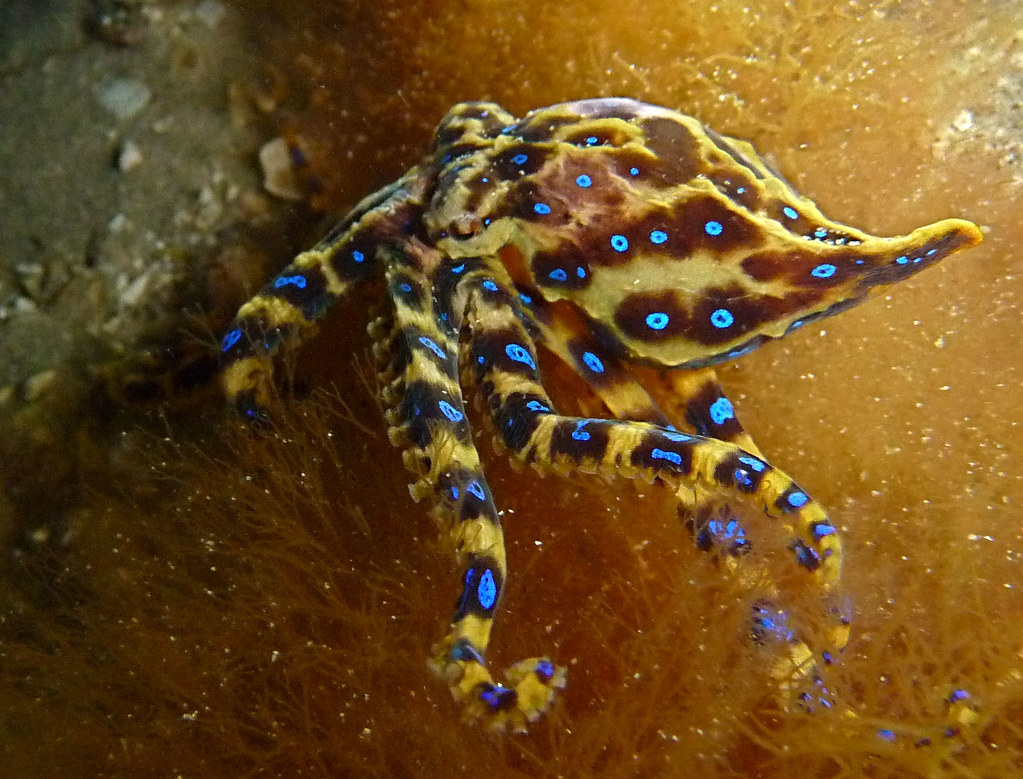
The Blue-Ringed Octopus (Hapalochlaena) is a tiny creature with a huge personality. Most of the time, it’s a master of disguise, blending into the sandy bottom of a tide pool like a piece of boring, brown coral. But the moment it feels threatened—the moment a predator (or a curious hand) gets too close—it flips a switch.
It’s the ultimate biological rebuttal: "I was trying to be polite and hide, but alright... you asked for it."
The Glow: Lighting Up the Rings
How does a creature "turn on" its skin? It all comes back to those specialized cells we mentioned in our very first post, specifically the Iridophores.
Inside the skin of a Blue-Ringed Octopus are stacks of tiny, iridescent plates. When the octopus relaxes its muscles, these plates reflect light in a way that creates those brilliant, electric-blue rings. What’s wild is that this isn't just a "color"—it’s structural color. The octopus is literally manipulating the physics of light to create a neon sign that says "STAY AWAY."
At the same time, it darkens the surrounding skin using its chromatophores (pigment sacks), creating a high-contrast display that makes the blue pop even harder.
The Payload: Tetrodotoxin
The glow is just the warning label. The actual product inside is much scarier. The Blue-Ringed Octopus carries a neurotoxin called tetrodotoxin (TTX).
Here’s the geeky/scary breakdown:
Produced by Bacteria: The octopus doesn't actually "make" the venom itself; it has a symbiotic relationship with bacteria living in its salivary glands.
1,200 Times Deadlier than Cyanide: This stuff is no joke. A single octopus (which fits in the palm of your hand) carries enough venom to kill 26 adult humans within minutes.
The Stealth Bite: Their beak is so small and sharp that many victims don't even realize they've been bitten until the paralysis starts.
Why "Active" Warning Works
Most venomous animals (like bees or snakes) are "honestly" colored—they look dangerous all the time. But the Blue-Ringed Octopus is a facultative warner. It only shows its lethal side when it needs to. This saves energy and keeps its location a secret until the very last second. It’s the "concealed carry" of the ocean world.
The Octo-Zone Takeaway
The Blue-Ringed Octopus is a reminder that in the ocean, "small" does not mean "vulnerable." It is a high-tech survival machine that uses physics to warn you and chemistry to stop you. It’s basically a living, breathing security system.
Geek Question for you: If you could have one biological "warning sign" to tell people you need some space, what would it be? (I’m leaning toward glowing red eyes, personally). Let me know in the comments!


Comments
Post a Comment